
Why balance unlocks what's already there.
Most soil systems work from exchange capacity, how much of each cation the soil holds, and whether the ratio sits in range. DRIS reads further.
How to read it.
Hover a card to find it on the report, or click to enlarge.
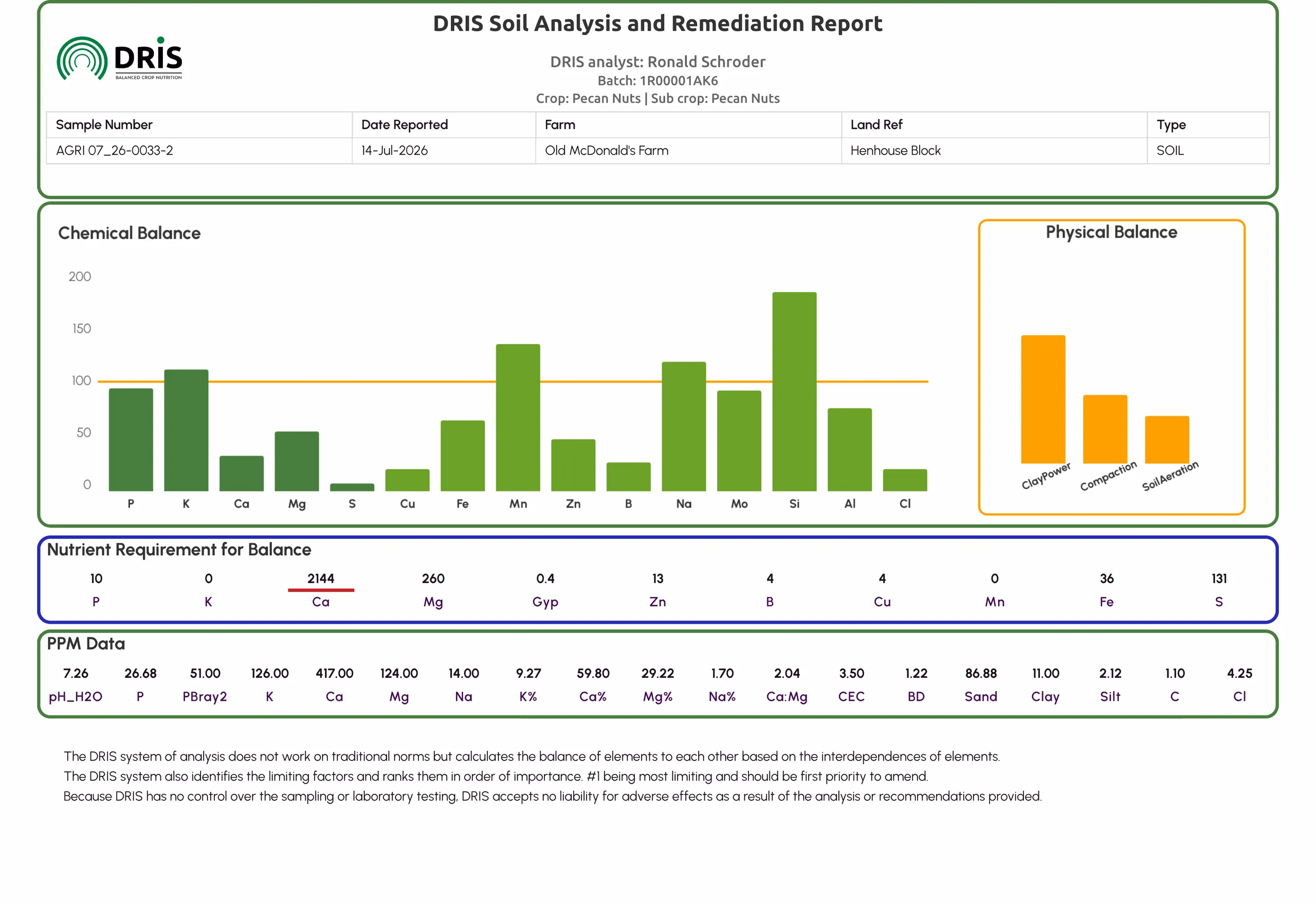
Chemical balance · green bars
Every element against every other.
Measured against each other, not against a fixed sufficiency range. This is where DRIS starts: get the chemistry right first.
Elements may be within the range of norms but still have limiting or antagonistic effects on each other, making them immobile in the soil.
Physical balance · orange bars
Can roots actually reach it?
Even correct chemistry underdelivers if the soil's structure won't let roots through. From the same lab data (bulk density, CEC, texture), DRIS calculates:
- Clay Power
- Compaction factor
- Soil aeration factor
Across DRIS soil analyses, compaction and aeration are consistently the two factors most limiting the soil's potential.
The phosphate the standard test misses
Bray 1 shows what's available. Bray 2 shows what's locked.
DRIS takes in every element from the lab data, including phosphate, and uses Bray 2 alongside Bray 1. Bray 1 only shows what's plant-available right now. Bray 2 shows the phosphate locked to aluminium that Bray 1 misses entirely.
The gap between the two numbers is phosphate sitting in your soil, unused. DRIS knows that balance is the tool to make locked-up elements available.
What causes compaction
Where waterlogging starts.
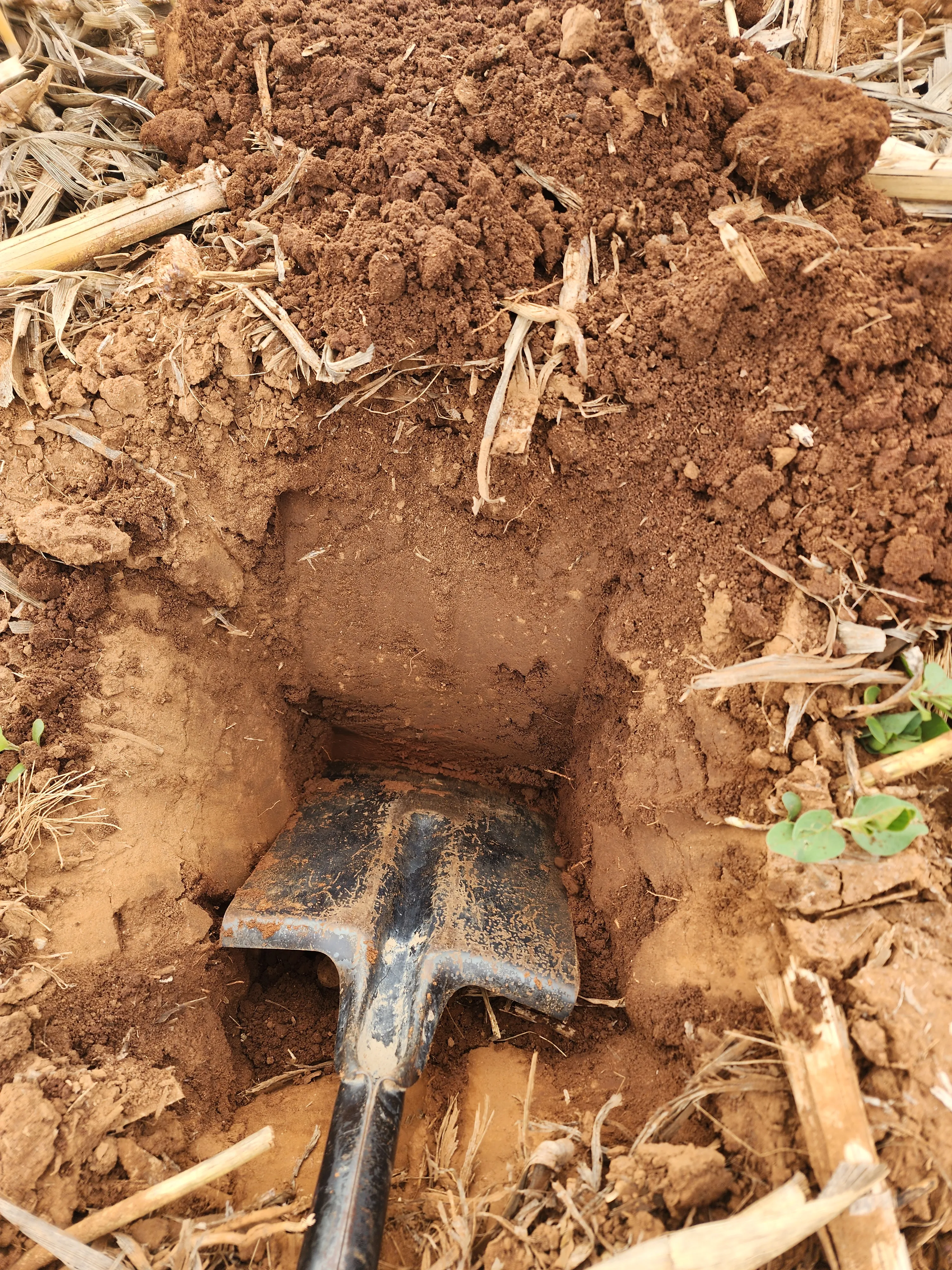
Silt and clay particles are small enough to travel with water through the soil profile. They keep moving until they hit an obstruction, usually the root zone, where they settle and form a compaction layer. That layer blocks oxygen, creates anaerobic conditions, and is where waterlogging starts.
The correction DRIS calculates
Flocculate first, then leach.
Standard agricultural lime sits at roughly 750 micron, too coarse to move through the soil on its own. DRIS instead calculates the exact kg/ha of micronised calcium carbonate and calcium sulfate your soil needs, fine enough to travel with water into the root zone:
It's important to calculate the exact amount of micronised calcium required to get a result. This is not derived from your normal lime application rates. DRIS calculates the requirement; sourcing the correction is yours, through whichever supplier you choose.
DRIS findings · what compaction costs the crop
Even the best fertiliser can't reach what compaction locks away.
Across DRIS analyses, many of the challenges that look like fertiliser problems are in fact rooted in soil compaction and poor aeration. Aeration is the foundation of nutrient availability and biological activity. Without it, nutrition stalls in three predictable ways.
01
Poor nutrient uptake
Elements may be present and balanced, but a compacted, oxygen-starved root zone keeps the plant from drawing them in.
02
Limited root development
A compaction layer stops roots going deep. Restore structure and aeration and roots establish the strong, healthy system efficient uptake depends on.
03
Suppressed energy metabolism
Without oxygen at the roots, the plant can't power the conversions that turn applied nutrients into usable amino acids and proteins.
The diagnostic tell
High nitrite (NO₂) in a sap analysis is a telltale sign that the soil is compacted and the applied nitrogen hasn't been converted by the plant. It's where physical and chemical balance meet, and exactly why DRIS reads soil structure alongside the nutrients.
Unlock what your soil already holds.
Upload your existing soil reports and we'll show you the chemical and physical balance, free.