
The better the samples, the more consistent the results.
One sample, two results. Collect the youngest fully mature leaf, pack it securely, and send it in. We'll handle the rest. Follow these seven steps for an accurate reading.
Where to sample
Location of sampling
Where you walk decides what the report represents. Sample the crop that represents the block, not its edges or its outliers.
Skip the outermost rows, and the first and last 10 steps of each row.
Pick only healthy leaves that reflect the average condition of the crop.
Sample from the same side of the plant (sunny or shady) the whole way through.
Got problem areas? Sample and label them separately, never mixed in.
When to sample
Best time for sampling
Sample between 7:30 and 10:00am. This is when the plant is fully hydrated and actively absorbing, giving a stable, repeatable reading. Stick to the same window every time so your results stay comparable.
Hold off until 7:30. The plant isn't fully hydrated this early.
The plant is fully hydrated and actively absorbing, giving a stable, repeatable reading. Sample in this window every time.
Transpiration speeds up and sap concentration shifts, so results reflect the plant under heat stress, not its normal balance.
Which part
Which part of the plant to sample
Take the youngest fully mature leaf from the top of the shoot, not the newest emerging leaf, and not an older leaf further down. Sampling the same leaf position every time is what makes results comparable across samples and seasons, so you can track what's actually changing.
Remove the petiole, the short stem connecting leaf to plant, before packing.
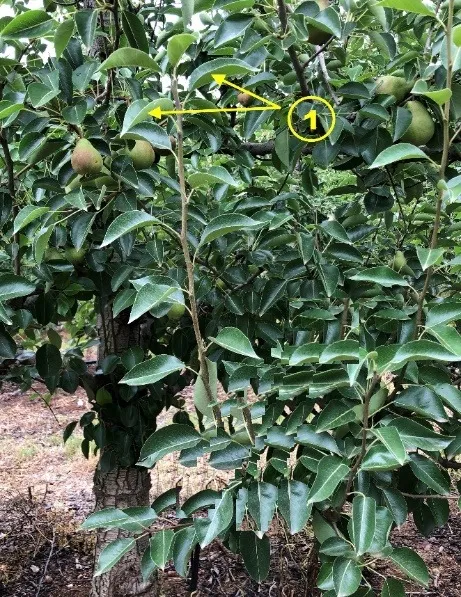
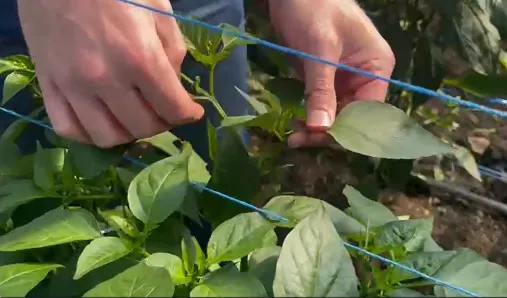
1 · Youngest fully mature leaf, top of shoot · 2 · Removing the petiole before packing
How much
Sample size: how many leaves?
90–120 leaves (150–300 g) gives the lab enough material for both analyses. Larger-leafed crops need fewer; smaller leaves need more. If you're unsure for your crop, contact us for guidance.
Pack & store
Packing and storing samples
✓ Do this
✓Pat wet leaves dry with a tissue before packing.
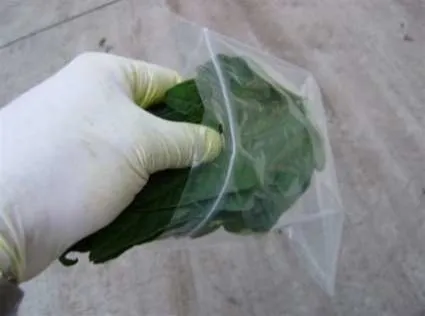
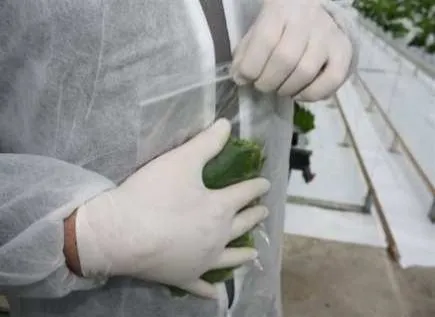
✓Stack leaves neatly in a zip-lock bag, fold large leaves to fit.
✓Squeeze all air out to prevent evaporation and degradation.
✓Keep samples cool in a cooler box or insulated bag in the field.
✓A fridge is fine for short-term storage before shipping.
✕ Never do this
✕Store wet leaves in the bag.
✕Leave samples in a hot car or under direct sun.
✕Mix healthy leaves with problem-area samples.
✕Freeze samples or rest them on ice packs, freezing ruptures cell walls and ruins the sap analysis.
Ship it
Sending the samples
Prepare for shipment
Remove all air from zip-lock bags before sealing.
Hold at a stable temperature, not too hot, not too cold.
Storing before shipping? Use a fridge or air-conditioned room. Never freeze the samples.
Ship in a cooler box, away from UV light and temperature swings.
Where to send · overnight courier
South Africa · Intertek
Intertek Lab
Portion 113, Farm Elandsfontein, District Bapsfontein 412JR, 1510, Gauteng
East & Central Africa · Cropnuts
Cropnuts Lab
Crop Nutrition Laboratory Services, Limuru, off Limuru Road, P.O. Box 66437-00800, Nairobi, Kenya
Contact us before shipping from East or Central Africa.
Label your bag correctly first ↓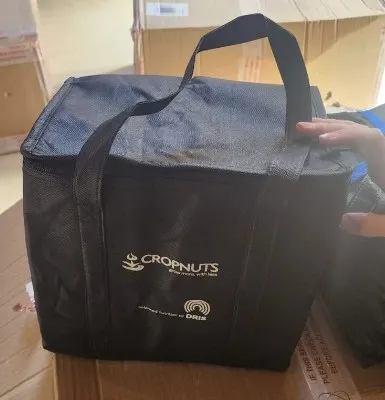
Before you close the box
Quick sampling checklist
How you label the bag decides what we can read.
Every bag you send has to match its line on the intake sheet, exactly. If the label doesn't match, we can't trace the sample to your block, and the report is wrong or can't be issued. Two minutes of careful labeling protects the whole analysis.
A correctly filled label
Write on the bag itself, or on a waterproof tag inside a second bag. Never on paper that can get wet.
Get these right, every bag
Ready to send your sample?
Log your batch on the DRIS portal before you ship. Capturing every sample online is what lets us match each bag to your block, so the label on the bag must match what you enter.
It's the same intake sheet, online: enter your details and every sample, and we'll email a confirmation and notify the lab. Then ship your bags to the lab below.
South Africa · ship overnight to
Intertek Lab
Portion 113, Farm Elandsfontein, District Bapsfontein 412JR, 1510, Gauteng, South Africa
East & Central Africa · ship to Cropnuts
Cropnuts Lab
Crop Nutrition Laboratory Services, Limuru, off Limuru Road, P.O. Box 66437-00800, Nairobi, Kenya
Curious what you get back? Good sampling in, precise nutrient-balance indices out.
See a DRIS sap report