
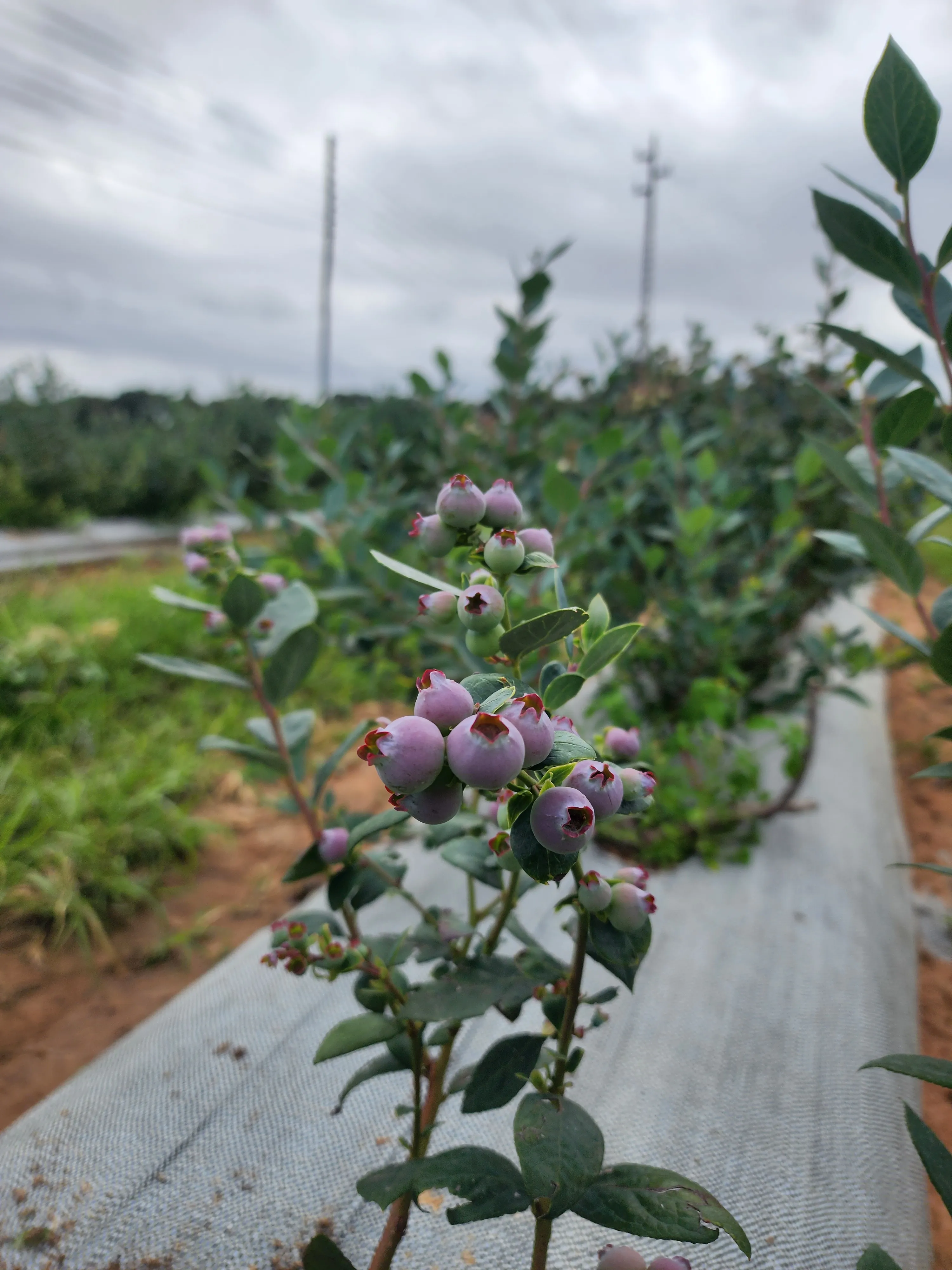
Blueberry Nutrition Unlocked with DRIS (Part 2)
What a full season of DRIS monitoring revealed about energy balance, Brix trends, calcium and translocation, and how they shaped marketable yield.
In Part 1, we explored how DRIS monitoring uncovered the hidden nutritional challenges inside substrate blueberry systems: from aeration problems to macro-element pressure and variety-specific behaviour.
Part 2 shifts to what happened next: how the plants handled the high-demand bulking stage, what Brix patterns revealed about energy stress, and which nutrients ultimately shaped fruit quality and marketable yield.
01How energy decline impacts yield
DRIS tracks energy status using Brix readings in both leaves and berries. During bulking, leaf Brix dropped while fruit Brix increased, as expected, but only to a point. When the gap widened too much, it signalled energy stress, closely aligned with low magnesium, falling potassium and phosphate, and poor nitrogen conversion (high NO₂).
This explained why total yield stayed stable while some varieties struggled to size up. As balance improved, marketable yield rose: leaf Brix increased (better photosynthesis) and fruit Brix kept improving, supporting flavour, shelf life and internal density.
02Calcium & manganese for quality
Calcium. Crucial for cell wall strength, firmness and shelf life, and hard to fix once fruit development advances. Best addressed early through fertigation and maintained with weekly Ca + fulvic treatments.
Manganese. Essential for enzyme function, berry colour, flavour and post-harvest durability. Low Mn correlated with softer berries and weaker storage; correcting it early noticeably improved internal quality later in the season.
03Fruit translocation data
Two fruit analyses were conducted to see how effectively nutrients moved into the berries. While not all nutrients improved this season, the data established a valuable baseline. Each variety showed distinct translocation behaviour, key information for planning Ca, K and P applications next year.
04Measurable results
Even with macro-element challenges that couldn't be fully corrected mid-season, the farm recorded clear improvements:
- Fewer undersized berries
- Better firmness and internal structure
- Longer shelf life
- More consistent results across varieties
- Higher marketable yield, not just total tonnage
“Marketable yield is what pays the bills. DRIS keeps more berries in export spec by maintaining balance during the most demanding growth stages.”
Charles le Roux, Director, DRIS
05Priorities for the coming season
- Fix macro-elements before growth begins. Aeration, substrate structure, and Mg/K/P/N balance.
- Develop variety-specific plans. Genetics drives nutrient behaviour.
- Support energy during bulking. Watch Mg, P, K and nitrogen conversion.
- Monitor continuously. Monthly sampling reveals trends before symptoms appear.
- Drop the multi-trace shotgun. Targeted corrections are faster, cleaner and cheaper.
Every production unit has its own nutritional fingerprint. Measuring and managing the plant's real demands is the pathway to consistent marketable yield and export-grade quality.
See it on your own crop.
Send us one existing lab report and we'll show you the limiting nutrient, free.